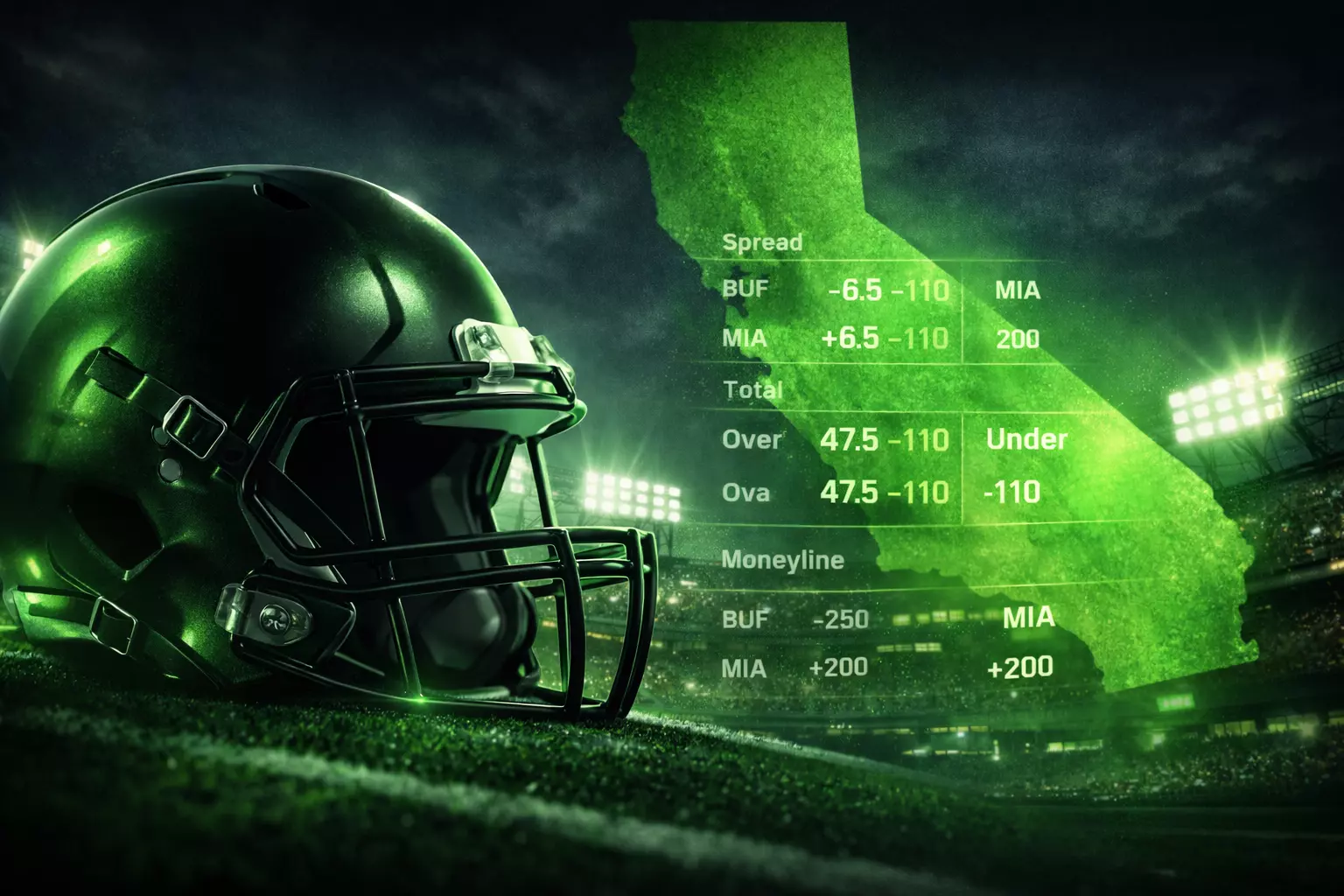
Millions of Americans open the DraftKings app on game day and place a bet in seconds. In California, that same app looks very different.
DraftKings is a very popular name in the sporting world, offering a wide range of products and services from sports coverage to fantasy contests. While it’s a global brand, it runs differently depending on its region, adapting its offerings to local law rather than offering a single universal experience.
California is deeply connected to sports and gaming culture, but DraftKings does not operate here in the same way it does in many other states. Some products are accessible, while others are not. That partial availability creates confusion, particularly for fans who see the brand promoted nationally. Understanding what DraftKings can and cannot offer in California starts with the current legal landscape.
Traditional sports betting is not legal in California. That includes mobile sportsbooks, online betting apps and retail sports betting locations. Because of this, Californians cannot legally place standard sports wagers through platforms like DraftKings, where users bet on game outcomes, point spreads or totals.
This position is increasingly unusual at the national level. According to an overview from TrafficGuard, Americans are projected to wager between $160 billion and $170 billion legally on sports this year, driven by regulated markets now operating in most US states. That scale highlights how widely sports betting has been adopted elsewhere, and how much activity now takes place under formal oversight.
California, despite being the most populous state and one of the most influential sports and gaming markets in the country, remains outside that system. Its approach to sports betting has relied largely on ballot initiatives rather than direct legislative action. While the issue has reached voters, competing proposals and disagreements over market control have repeatedly stalled progress. That process tends to move more slowly than legislative models used in other states, particularly when multiple interest groups are involved. As a result, California continues to stand out as one of the most prominent holdouts in the expanding US sports betting landscape.
Although sports betting itself is not legal, DraftKings is not entirely unavailable in California. Certain services are permitted, which is where the confusion often begins.
Californians can legally access:
This layered access explains why DraftKings feels present in California without offering the full betting experience fans hear about elsewhere.
In legal states like New York or New Jersey, the DraftKings app opens directly into sportsbook markets with live odds, bet slips, and promotional banners. In California, those same sportsbook tabs are either hidden or unavailable, and users are redirected toward Daily Fantasy Sports or prediction-style contests instead.
That contrast makes the platform feel incomplete to California users who are familiar with the brand’s national advertising.
The ongoing debate around sports betting in California is driven as much by regulation as by popularity. In states where sports betting is legal, sportsbooks operate under strict oversight. That typically includes safeguards such as age verification, responsible gambling tools, limits on advertising and clear rules around odds and payouts. Regulators monitor how sportsbooks operate and how consumer disputes are handled.
California’s hesitation reflects concerns about how sports betting would be regulated and who would ultimately control it. Tribal gaming interests, lawmakers, and consumer advocates all play a role in shaping the discussion and reaching consensus has proven difficult.
This debate mirrors familiar conversations about platform governance and competitive fairness. Who sets the rules, who benefits, and how players are protected are questions that extend beyond sports betting into gaming and esports more broadly.
It is also important to keep perspective. Gambling is entertainment, not a way to make money. Regulation in legal states exists to reinforce that principle and reduce potential harm, which is part of why California continues to approach the issue cautiously.
For many fans, the frustration is not just about legality. It is about the overall experience surrounding modern sports viewing.
In states where sports betting is legal, bonuses and promotions are a central part of how DraftKings engages users. These offers are woven into the sportsbook experience, especially around major games and seasonal moments. That is why Californians often hear about things like a DraftKings promo code for new users, even though those offers are not available locally because sports betting is not permitted in the state.
In legal markets, that experience often includes:
For sports fans who follow national leagues closely, this gap can feel particularly noticeable. Betting-related elements have become part of the wider sports conversation, from broadcast commentary to social media discussion. In California, fans are exposed to that ecosystem without being able to fully participate in it, which reinforces the sense of being just outside the modern sports betting landscape.
In states where sports betting is legal, regulated wagering has become a meaningful source of public revenue. According to USAFacts, states collected more than $2.7 billion in sports betting tax revenue through 2025, continuing a steady upward trend as more markets mature and betting activity grows. A small number of large states account for a significant share of that total, with places like New York consistently generating hundreds of millions of dollars annually on their own.
Because California doesn’t have a legal sports betting market, it can’t participate in those revenue streams. Supporters of legalization often point to other states where betting taxes are directed toward education, infrastructure or general public funds, while critics argue against relying on gambling-related income to support essential services.
What makes the issue especially notable is California’s size. As the most populous state and one of the largest sports markets and hosting some of the biggest events, even limited participation could translate into substantial revenue compared with smaller states. That potential continues to surface in discussions about how sports betting fits into California’s broader sports, gaming, and esports ecosystem, even as the legal framework remains unchanged.
Sports betting has not disappeared from California’s policy conversation. It continues to reappear through ballot initiatives and public debate, particularly as more states move forward with regulated markets.
Any future change would likely require voter approval and cooperation between tribal gaming groups and state authorities. Past efforts have shown how difficult that alignment can be, even when public awareness is high.
There is no clear timeline for legalization. Even advocates acknowledge that progress would likely be incremental rather than sudden, shaped by how proposals are structured and presented to voters. For now, California remains on the sidelines.
At present, the situation is relatively clear. DraftKings Sportsbook and traditional sports betting are not legal in California. DraftKings Daily Fantasy Sports and prediction markets are available under different legal frameworks.
Until California resolves its regulatory debate, DraftKings will remain a partial presence in the state — visible in branding, accessible in limited products, but fundamentally different from the full sportsbook experience available elsewhere in the U.S.


Players must be 21 years of age or older or reach the minimum age for gambling in their respective state and located in jurisdictions where online gambling is legal. Please play responsibly. Bet with your head, not over it. If you or someone you know has a gambling problem, and wants help, call or visit: (a) the Council on Compulsive Gambling of New Jersey at 1-800-Gambler or www.800gambler.org; or (b) Gamblers Anonymous at 855-2-CALL-GA or www.gamblersanonymous.org.