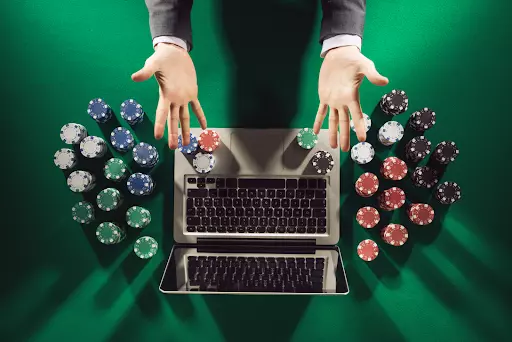
One of the stranger assumptions about gaming is that players want certainty.
We often talk about balance, fairness and skill as though the ideal game would allow the better player to win every time. Yet some of the most successful games ever created are built around uncertainty. The rare item drop that never seems to arrive. The impossible comeback in a strategy game. The card draw that changes everything.
Even outside traditional video games, players continue to seek out experiences where outcomes are not guaranteed. Whether someone is opening a pack in a digital card game or exploring alternatives such as casinos not on gamstop, the appeal is often rooted in the same basic idea: the possibility that something unexpected might happen.
That may sound obvious, but it runs against how many people think about gaming.
After all, skill is usually celebrated. We admire professional esports players because they consistently outperform opponents. We respect speedrunners because they reduce games to a level of precision that most players cannot imagine. Success earned through practice feels more meaningful than success delivered by chance.
Yet pure skill creates its own problem.
If every match, race or challenge could be predicted with complete accuracy, much of the excitement would disappear. The strongest player would always win. The better team would always prevail. There would be very little reason to watch, let alone play.
Think about some of the gaming moments people remember most.
They are not always demonstrations of perfect execution. More often, they involve an element of surprise. A low-ranked competitor eliminates a favourite. A rare item finally appears after weeks of grinding. A desperate strategy somehow succeeds against overwhelming odds.
Randomness creates tension because it keeps possibilities alive. It introduces outcomes that cannot be fully controlled, even by experienced players.
Game designers have understood this for decades. Reward systems, loot mechanics and progression structures often rely on uncertainty because uncertainty keeps players engaged. Many of the same principles can be seen in live service games, where progression systems, unlockable rewards and ongoing content updates encourage players to keep returning.
The most successful games rarely sit at either extreme.
Poker is a useful example. A beginner can beat a professional in a single hand. Over hundreds or thousands of hands, however, skill tends to emerge. Chance shapes individual moments, while decision-making influences long-term results.
Many popular video games work in much the same way.
Competitive titles include random elements, but those elements exist within systems that reward knowledge, preparation and good judgement. Even games known for unpredictability generally provide players with ways to improve their chances of success.
The balance matters because too much randomness feels unfair. Too little randomness feels predictable.
Players stay engaged when they feel their decisions matter while still recognising that surprises remain possible.
There is another reason uncertainty has survived across so many forms of gaming.
Risk makes outcomes feel meaningful.
Winning a challenge that was never in doubt provides limited satisfaction. Success feels more rewarding when failure is a genuine possibility. The same principle helps explain why competitive games, traditional sports and countless other forms of entertainment remain compelling despite uncertain outcomes.
The attraction is not always the reward itself. Often it is the tension beforehand.
For a broader overview of how randomness, reward systems and player behaviour fit into modern game development, Wikipedia’s article on game design provides useful background on many of the principles that shape contemporary gaming experiences.
The technology may have changed dramatically over the last few decades. Arcades have largely disappeared. Online gaming has become mainstream. Entire genres have emerged where none existed before.
What has not changed is the appeal of uncertainty.
Players still want their decisions to matter. They still want skill to be rewarded. But they also want the possibility that something surprising could happen.
Without that possibility, many games would simply feel less alive


Players must be 21 years of age or older or reach the minimum age for gambling in their respective state and located in jurisdictions where online gambling is legal. Please play responsibly. Bet with your head, not over it. If you or someone you know has a gambling problem, and wants help, call or visit: (a) the Council on Compulsive Gambling of New Jersey at 1-800-Gambler or www.800gambler.org; or (b) Gamblers Anonymous at 855-2-CALL-GA or www.gamblersanonymous.org.