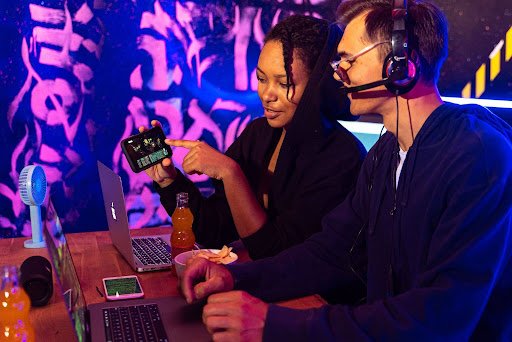
Slot gaming was once largely a private activity: a player, a screen and a sequence of spins. Streaming changed that format. In the UK, casino-focused creators began turning slot sessions into something closer to live entertainment, adding commentary, humour, reactions and an audience that could respond in real time.
As the format matured, viewers increasingly came for more than the games themselves. They followed personalities, recurring jokes, dramatic bonus rounds and community interaction. That combination gives casino streams a format built around both gameplay and audience interaction.
Casino streaming grew alongside the wider expansion of livestreaming and gaming video on platforms such as Twitch and YouTube. Early casino streams could be fairly basic: a game window, a webcam and a running commentary. Over time, the format became much more polished.
Better microphones, overlays, scene changes, highlight editing and recognisable channel branding made casino streaming look increasingly like other creator-led gaming content. The presentation became part of the experience, not just a frame around the gameplay.
Slots are unusually well suited to short-form reactions and livestream pacing because the action happens in compact cycles. Individual spins create compact sequences of anticipation and resolution, while bonus features can extend those sequences. Bonus symbols, multipliers, cascades and feature triggers add obvious peaks that an audience can understand without needing a lengthy explanation of strategy or rules.
Modern slot design also produces visual sequences that viewers can follow on screen. In the Le Bandit slot, winning symbols disappear during cascades, leaving Golden Squares that a Rainbow symbol can activate. These changes give a streamer specific events to explain or react to as the sequence unfolds.
Successful slot streaming is rarely just a screen recording. The creator supplies the context that turns repeated spins into a show.
Slot streamers narrate what is happening, react to unexpected outcomes and fill slower stretches with conversation. Over time, recurring jokes, catchphrases and familiar reactions become part of the channel’s identity. The same game can feel very different depending on who is presenting it.
That is why many gambling content creators operate more like conventional gaming personalities than anonymous players. For some viewers, familiarity with the creator can matter as much as the individual title. A new release may provide the subject for a stream, but the creator’s delivery, timing and relationship with viewers determine whether people keep watching after the novelty wears off.
Livestreaming added something that prerecorded casino videos could not fully reproduce: a shared room of people reacting at the same time.
When a bonus round starts or a notable feature appears, chat can instantly fill with emotes, predictions and running jokes. Regular viewers recognise one another, remember earlier streams and develop community references that make sense mainly to people who keep coming back.
That interaction changes the rhythm of the content. A slot session that would otherwise be solitary becomes a group experience built around shared anticipation. The streamer can respond to chat between spins, acknowledge reactions and turn a single gameplay event into a conversation.
At its best, the format resembles other forms of live entertainment: the outcome matters, but so does watching it unfold with a familiar host and an active audience.
Livestreams are immediate, but YouTube made casino content easier to discover after the original session ended. Creators could cut a multi-hour broadcast into a shorter video focused on the most notable moments, or isolate individual clips around a bonus feature, unusual sequence or strong reaction.
That gave YouTube casino streamers a different publishing model from purely live channels. Titles and thumbnails could centre on a specific event, while searchable videos allowed viewers to find a creator without being online at the exact moment a stream started.
This also helped slot streaming spread across formats. Full sessions could serve dedicated viewers, edited videos could offer a tighter narrative, and short clips could circulate independently. In that sense, online slots streaming became less dependent on a single live broadcast and more like a broader content pipeline in which one session could produce several pieces of video.
The environment is more restricted today than it was during casino streaming’s earlier growth. Twitch’s current Community Guidelines prohibit users from sharing links or affiliate codes to sites containing slots, roulette or dice games, and the platform also prohibits streams from a named list of gambling sites under its policy criteria.
YouTube’s rules prohibit content that facilitates access to online gambling sites that are not certified by Google. Content that facilitates access to, promotes or depicts online gambling can also be age-restricted even when the site is certified. Google certification and a gambling operator’s licence are separate requirements.
For creators, that has changed the publishing playbook. Casino content now has to be produced with closer attention to platform rules, age controls, links, sponsorship presentation and where particular material is distributed. Alternative livestream services such as Kick are also part of the current casino-streaming landscape, while Twitch and YouTube remain important for established audiences and edited video.
Casino streaming now sits at the intersection of livestream gaming, reaction content, creator culture and online community. Slots provide the recurring visual events, but streamers give those events context, pacing and personality.
That is the bigger reason the format developed beyond simple gameplay footage. Within this format, viewers can follow a creator, participate through chat, revisit edited highlights and recognise familiar patterns in the content. The result is a distinct streaming genre built as much around shared reactions and creator personality as around the slots on screen.


Players must be 21 years of age or older or reach the minimum age for gambling in their respective state and located in jurisdictions where online gambling is legal. Please play responsibly. Bet with your head, not over it. If you or someone you know has a gambling problem, and wants help, call or visit: (a) the Council on Compulsive Gambling of New Jersey at 1-800-Gambler or www.800gambler.org; or (b) Gamblers Anonymous at 855-2-CALL-GA or www.gamblersanonymous.org.