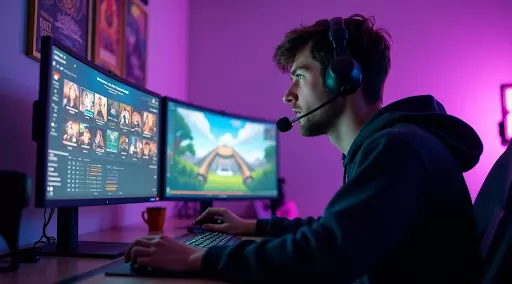
Esports used to look like the top floor of competitive gaming. Professional players competed on major stages, fans watched the broadcasts, and everyone else returned to ranked matches once the tournament ended.Search behavior also reflects the local nature of online gaming communities. Finnish users, for example, may search for terms such as euteller kasinot when looking for gaming platforms that support a familiar regional payment method. However, payment availability alone should never be treated as proof that a platform is trustworthy. Any operator mentioned in editorial content should still be assessed based on its licensing, age-verification procedures, responsible-gaming tools and legal status in the player’s jurisdiction.
That separation is disappearing.
Modern esports is increasingly connected to the communities that form around online games. Ranked ladders, Discord servers, creator streams, amateur tournaments, custom game modes and community-run events now operate as parts of the same ecosystem. A player can watch a professional match, discuss it with friends, test the strategy in-game and enter a community tournament before the day is over.
This connection matters because esports does more than entertain an existing audience. It gives online gaming communities shared stories, recognizable leaders and reasons to keep participating. At the same time, those communities supply esports with new players, creators, analysts, organizers and long-term fans.
The relationship is no longer one-directional. Esports and online gaming communities are building each other.
The competitive structure of an online game can exist without a professional scene. Players can climb ranks, compare statistics and try to improve without ever watching a tournament.
Esports gives that competition a wider meaning.
A difficult mechanic becomes more interesting when fans see a professional player use it under pressure. A balance update matters more when it could change the strategy of an upcoming event. A ranked player may begin practicing a specific role because they identify with a professional competitor who plays it at the highest level.
This creates a feedback loop:
League of Legends, VALORANT, Counter-Strike 2 and Rocket League all demonstrate this process in different ways. Their professional scenes are not detached products running beside the games. They shape how players understand maps, roles, team composition, mechanical skill and even the language used in everyday matches.
The result is a shared competitive culture rather than a simple division between players and spectators.
Traditional sports audiences are usually separated from the athletes they watch. A football fan cannot enter the stadium after a match and immediately attempt the same formation against another organized team.
Esports has a much shorter distance between viewing and participation.
When a tournament ends, viewers can open the same game, play on familiar maps and attempt versions of the strategies they just watched. The difference in skill may be enormous, but the basic environment remains recognizable.
This is one of esports’ most powerful community-building features. Spectatorship can lead directly to activity.
A fan may begin by watching a major final. That fan might then:
The viewer does not have to become a professional player for that journey to matter. Each step increases their connection to the game and to the people around it.
For publishers, this can extend the life of a title. For communities, it creates recurring cycles of conversation and participation around major matches, roster changes, patches and tournament seasons.
Professional broadcasts remain important, but much of esports culture is built away from the main stream.
Discord servers, Reddit communities, group chats, forums and social platforms act as the connective tissue of competitive gaming. They are where players find teams, debate roster moves, share highlights, review balance updates and organize smaller competitions.
These spaces also preserve activity between major events.
A tournament may run for a weekend, but community discussion can continue for months. Fans analyze individual rounds, compare regional styles and speculate about future lineups. Players create guides based on what they saw. Amateur teams schedule practice sessions. Tournament organizers recruit volunteers and commentators.
In that sense, community platforms are not simply places where people talk about esports. They perform essential functions within the ecosystem.
They help with:
The health of an esports scene can therefore depend on the quality of its unofficial infrastructure. A game may have an impressive professional league, but if new players cannot find teammates or community organizers lack support, the wider ecosystem can struggle to grow.
One of the most important developments in modern esports is the growth of structured competition below the professional level.
Ranked matchmaking measures individual progress, but it does not always reproduce the experience of organized team play. Professional leagues, meanwhile, are inaccessible to almost everyone.
Community tournaments fill the gap.
Small online cups, collegiate competitions, local leagues and publisher-supported amateur systems give players a reason to form stable teams and practice with long-term goals. Even when there is no realistic professional career at the end, organized play creates a different type of engagement from standard matchmaking.
Players must learn to:
VALORANT Premier is a strong example of how publishers can bring this structure directly into the game. Instead of leaving aspiring teams to rely entirely on third-party tournament systems, Premier provides organized competition and connects high-level participation with the broader path toward professional play.
League of Legends Clash serves a related community function. It turns groups of friends and ranked players into temporary tournament teams, giving them a version of the preparation, pressure and bracket progression usually associated with esports events.
These systems are valuable even for players who never advance further. They allow communities to experience esports as participants rather than distant observers.
Official tournament broadcasts once controlled most of the esports viewing experience. Fans watched the same commentators, graphics and analysis regardless of their personal preferences.
Co-streaming has changed that model.
Community creators can now provide alternative broadcasts built around a particular personality, region, language or style of analysis. Some viewers want detailed tactical breakdowns. Others prefer humor, emotional reactions or a relaxed watch party with a familiar creator.
This gives fans more than one way to connect with the same event.
Creators also translate professional esports for different parts of the community. A former player may explain advanced decisions. A regional streamer may provide cultural context. A casual creator can make a complicated game easier for new viewers to understand.
The official broadcast still provides the match, but community voices help determine how that match is interpreted.
This produces several benefits:
The risk is fragmentation. Different communities may receive incomplete information or become isolated inside creator-driven bubbles. However, when managed carefully, co-streaming makes esports feel less like a single broadcast and more like a network of connected viewing communities.
The relationship between esports and online communities is also growing through user-generated content.
Fortnite is one of the clearest examples. Its Creative tools and Unreal Editor for Fortnite allow creators to build and publish their own experiences. Community members are no longer limited to playing the modes designed directly by the publisher.
They can create:
This changes the traditional relationship between a developer and its audience. Communities become active designers of the environments in which they compete.
Custom maps and modes can also support professional play indirectly. Training scenarios help players improve specific skills. Community-created formats can test whether an idea is entertaining enough for organized competition. Smaller creators may identify popular mechanics before they appear in official events.
Similar patterns have existed for years in Counter-Strike, Warcraft III and other PC gaming communities. Some of esports’ most influential formats grew from mods or community experimentation rather than from a centralized professional strategy.
The modern difference is that publishers increasingly provide official tools, discovery systems and monetization programs for this activity.
Esports communities depend heavily on the movement of knowledge.
Professional matches produce large amounts of information. Players reveal tactics, positioning choices, draft priorities and mechanical techniques. Analysts and creators then break those details into formats that ordinary community members can understand.
The information moves through several layers:
This process lowers the barrier to entry.
Competitive games can be intimidating because their most important rules are not always explained by the tutorial. Players must learn unwritten expectations, common terminology, role responsibilities and rapidly changing strategies.
Community mentors make those systems easier to understand. They also help preserve knowledge when a game changes. A major patch may make an old guide irrelevant, but active communities can test the update and build a new understanding quickly.
Strong communities reward this exchange. Weak communities often replace education with gatekeeping, making new players feel that they must already understand the game before they are allowed to participate.
For esports to grow, communities must be capable of producing experts without excluding beginners.
As esports audiences grow, more commercial products are appearing around them. These include sponsorships, team merchandise, paid coaching, premium statistics, fantasy contests and regulated esports wagering.
This activity can support events, creators and organizations, but it also requires clear standards.
Esports communities often include younger users, while commercial gaming and wagering products may be legally restricted to adults. Publishers and media outlets must therefore distinguish between general competitive gaming content and age-restricted services.
Any discussion of esports betting or real-money gaming should focus only on operators licensed for the reader’s jurisdiction. Licensing information, age restrictions, responsible-play tools and promotional conditions should be presented clearly rather than hidden behind exaggerated claims.
Communities should be especially cautious when a platform:
Trust is central to the relationship between esports and commercial partners. A sponsorship may generate short-term revenue, but promoting a questionable platform can damage the credibility of a team, creator or publication for years.Promotional searches require an additional level of caution. A Polish phrase such as kasyno 100 zl bez depozytu may attract users looking for a specific no-deposit offer, but the wording of such promotions can be misleading without full context. Editorial coverage should clearly explain eligibility rules, wagering requirements, withdrawal limits and verification conditions instead of presenting the advertised amount as guaranteed cash. It should also reference only licensed operators permitted to offer such services in the user’s jurisdiction.
Growth brings challenges.
Competitive games can create strong identities, but those identities sometimes produce hostility toward opposing teams, regions or individual players. Social platforms can amplify harassment, misinformation and personal attacks faster than official organizations can respond.
Professional players may become targets after one poor performance. Creators can send large audiences toward a discussion without understanding its context. Community rumors may be repeated until they appear to be confirmed facts.
There are also risks inside the games themselves:
Moderation cannot be treated as a separate issue from esports development. A professional scene may attract people to a game, but the everyday community determines whether they stay.
Publishers need reporting systems that produce visible results. Tournament organizers need clear codes of conduct. Community managers need tools for handling repeat offenders. Creators must understand that their reactions can influence the behavior of thousands of viewers.
The strongest gaming communities are not those without conflict. They are those capable of handling conflict without allowing it to define the entire space.
Developers do not need to control every part of an esports ecosystem. In many cases, communities grow more effectively when they have room to create their own events, formats and traditions.
However, publishers can provide the foundation.
Useful support includes:
The goal should not be to turn every player into an esports professional. It should be to give different types of community members meaningful ways to participate.
Some people want to compete. Others want to coach, cast, analyze, organize events, create maps, moderate servers or simply watch with friends. A sustainable ecosystem recognizes all of these roles.
The next phase of esports will probably be defined less by the size of individual prize pools and more by the strength of the systems surrounding them.
Successful games will connect professional competition with amateur leagues, creator broadcasts, custom modes, community education and accessible social tools. Fans will move between watching, playing and creating without treating those activities as separate hobbies.
This participatory model gives esports something traditional sports cannot easily reproduce. The audience is not only close to the product. It actively helps build the product.
Community members develop strategies, organize events, produce analysis and create the social traditions that give a competitive game its identity. Esports then turns those activities into larger stories that attract new participants.
The relationship works because both sides provide something the other needs.
Esports gives online gaming communities visibility, structure and shared moments. Communities give esports talent, culture, continuity and relevance beyond the professional stage.
The growing connection between esports and online gaming communities is changing what it means to be a fan.
Watching is no longer the final form of participation. A viewer can become a player, teammate, organizer, creator or analyst. A ranked match can lead to an amateur tournament. A community strategy can appear in professional play. A creator’s watch party can become the preferred broadcast for an entire region.
This is why the future of esports cannot be measured only through major events or professional organizations.
Its real strength lies in the network around them: the players who keep competing, the creators who explain the action, the organizers who build smaller events and the communities that give every match a wider meaning.
Esports may provide the stage, but online gaming communities are increasingly responsible for keeping the show alive.


Players must be 21 years of age or older or reach the minimum age for gambling in their respective state and located in jurisdictions where online gambling is legal. Please play responsibly. Bet with your head, not over it. If you or someone you know has a gambling problem, and wants help, call or visit: (a) the Council on Compulsive Gambling of New Jersey at 1-800-Gambler or www.800gambler.org; or (b) Gamblers Anonymous at 855-2-CALL-GA or www.gamblersanonymous.org.