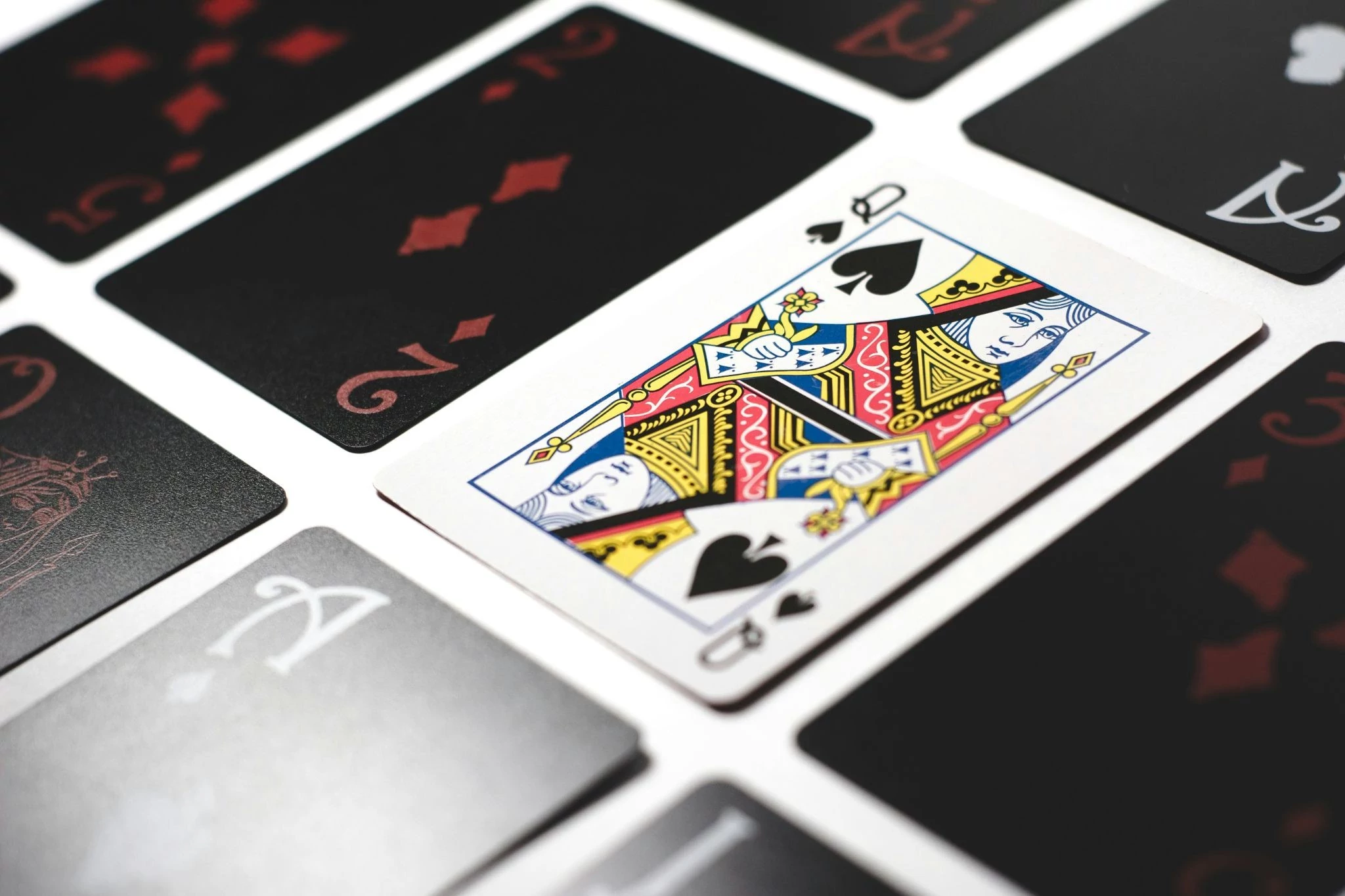
Australian Pontoon looks like regular blackjack to anyone walking past. But it isn’t. A stripped deck changes the probabilities, and hidden dealer cards remove the information standard strategy depends on. Bonus payouts for multi-card hands reward a different kind of risk.
Does every card game with 21 as the target count as blackjack under a different name?
It’s a fair question, and it comes up constantly once players outside Australia encounter Pontoon for the first time. The terminology alone creates confusion – “stick” replaces stand and “twist” replaces hit, while “buy” takes the place of double down. On the surface, it looks like someone renamed the buttons on a standard blackjack table and called it a day.
But that’s nowhere close to accurate.
Australian Pontoon operates on a fundamentally different set of rules, and those rules change both the house edge and the strategy from the ground up. Table games like Pontoon show why some players look beyond standard slots and live dealer basics. A page such as the Vegastars VIP program can be used as a wider reference point for how casino platforms present rewards, loyalty benefits and ongoing player value.
Standard blackjack uses 52-card decks. Australian Pontoon doesn’t.
Every deck in the shoe has the four face-value tens removed, leaving 48 cards per deck – what’s called a Spanish deck. Jacks, queens, and kings still count as ten, so the removal only affects four cards per deck, but the impact on probability compounds across six or eight decks in a shoe.
Removing those tens shifts the odds in the dealer’s favor. Casino mathematics data puts standard six-deck blackjack at a house edge of around 0.5% with basic strategy (or 2% with one deck). Australian Pontoon can have a different house edge from standard blackjack depending on the exact rule set, deck composition and payout structure. Because rules vary by venue and provider, players should check the table rules before treating any published house-edge figure as universal.
It’s a counterintuitive setup. You lose cards from the deck that should help you, but the compensation rules give back more than enough – provided you actually learn them.
In blackjack, the dealer’s upcard gives you the primary piece of information your strategy depends on. You see a six, you play differently than if you see an ace. That exposed card is the backbone of basic strategy charts worldwide.
Australian Pontoon takes it away entirely. The dealer doesn’t receive a hole card until all players have finished their hands. You’re making every decision – twist, stick, buy, split – with zero information about the dealer’s position.
This is a major shift. It changes when you should double and what hands are worth splitting.
It also changes how aggressively you should pursue multi-card totals. Gaming analyst Katarina Walker, recognized as the world authority on Spanish 21 and Australian Pontoon, wrote in The Pro’s Guide to Spanish 21 and Australian Pontoon that Pontoon strategy is considerably more complex than standard blackjack. This is largely because of the no-hole-card rule and the constraints it places on soft doubling.
Blackjack pays 3:2 on a natural 21 and even money on everything else. Australian Pontoon adds an extra payout layer: the five-card trick. Any hand of five cards that totals 21 or under pays 2:1, regardless of what those cards are.
This single rule changes the math on marginal hands dramatically. Hands that would be automatic stands in blackjack – a 15 or 16 drawn across four cards – become worth pursuing in Pontoon because the fifth card brings a payout bonus if you don’t bust. Additional bonuses exist for suited combinations of 6-7-8 and 7-7-7, pushing payouts higher still.
The payout gap between the two games is wider than you’d think:
Hand Outcome Blackjack Payout Australian Pontoon Payout
Natural 21 (two cards) 3:2 2:1 (Pontoon)
Five-card 21 or under 1:1 2:1
Non-suited 6-7-8 / 7-7-7 1:1 3:2
Suited 6-7-8 / 7-7-7 1:1 2:1
Spades 6-7-8 / 7-7-7 1:1 3:1
Player 21 vs dealer 21 Push Player wins
But look at that last row. In standard blackjack, if you and the dealer both finish on 21, the hand pushes and your bet comes back. In Australian Pontoon, the player’s 21 is paid out immediately, before the dealer has even acted. A dealer natural doesn’t cancel your win. This is an unusual rule globally, and it’s one of the reasons Pontoon’s house edge comes in lower than you’d expect given the stripped deck.
Online casinos have expanded access to card game variants that would’ve been impossible to find outside specific Australian venues a decade ago.
Vegastars fits into this discussion because modern casino platforms often use game variety, live dealer access and loyalty-style rewards to appeal to players who prefer more structured table games. For games like Pontoon, the important point is not only the platform, but whether the rules, payouts and table conditions are easy to review before playing.
If you’re approaching Pontoon online, a few strategic differences from blackjack are worth knowing:
That flexibility on doubling is particularly relevant online, where bet sizes and session lengths are entirely self-directed. Players who understand when to buy on a three or four-card hand have a mathematical edge over players who transfer their blackjack instincts directly.
According to a 2025 IMARC Group report on Australia’s online gambling market, the sector was valued at approximately USD 5.5 billion in 2024 and continues expanding alongside live dealer and table game adoption. Pontoon fits into that growth because it offers strategic depth that engaged players actively look for once standard blackjack loses its novelty.
Vegastars caters to this audience directly. The platform’s live casino section and table game variety both support repeat play, and the tiered VIP rewards program gives regular players a reason to stick with one platform. Promotional offers can add another layer to the decision, but players should always read the terms carefully before using a bonus on an unfamiliar rule set.
Australian Pontoon won’t replace blackjack. It doesn’t need to. It’s a standalone game with its own strategy and its own odds structure, built for a different kind of player.
One fair criticism: the stripped deck does feel strange at first.
Removing all four tens from every deck is an adjustment, and early sessions can feel like the math has gone slightly wrong. But that discomfort passes once the bonus payouts start arriving on five-card hands and suited combinations you’d never chase in regular blackjack. Calling Pontoon rebranded blackjack is like calling rugby a renamed version of football because both use an oval ball – the scoring works differently and the contact rules work differently.
The whole game rewards a completely different temperament.
Gambling is for entertainment purposes only and should never be considered a way to generate income. Play responsibly and only wager amounts you can comfortably afford to lose. Players must be 18 or older.


Players must be 21 years of age or older or reach the minimum age for gambling in their respective state and located in jurisdictions where online gambling is legal. Please play responsibly. Bet with your head, not over it. If you or someone you know has a gambling problem, and wants help, call or visit: (a) the Council on Compulsive Gambling of New Jersey at 1-800-Gambler or www.800gambler.org; or (b) Gamblers Anonymous at 855-2-CALL-GA or www.gamblersanonymous.org.