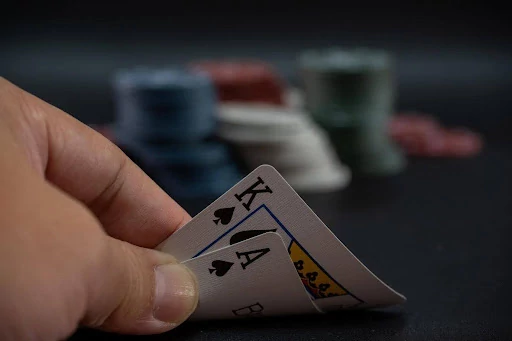
Blackjack has one straightforward goal, and that’s to beat the dealer without going over 21. The rules can change quite a bit from one table to another, though. Some versions remove numbered 10s, others reveal both of the dealer’s cards, and one lets players switch cards between two hands. Each variation changes the decisions players face and can affect the house edge.
Spanish 21, Double Exposure, Vegas Strip blackjack, European blackjack, and Blackjack Switch offer different ways to play the familiar card game. Knowing the differences helps you understand the rules before placing a bet, especially when a table looks familiar but pays out differently.
In classic blackjack, players receive two cards and choose to hit, stand, split a pair, or double down when the rules allow it. Number cards count at face value, face cards count as 10, and an ace can count as either 1 or 11. A natural blackjack consists of an ace and a 10-value card in the opening two cards.
The rules covered here can help players understand the differences between online blackjack formats. For an overview of available options, the list of bitcoin blackjack games provides another starting point for exploring the game online.
The natural blackjack payout is one of the first things to check. A 3:2 table pays $15 in profit on a $10 natural blackjack, with the original bet returned. A 6:5 table pays only $12 in profit on that same wager.
The dealer’s rules matter, too. A dealer who hits a soft 17 has another chance to improve the hand, which generally raises the house edge. Players comparing tables should check payouts, deck count, and doubling or splitting restrictions before deciding where to play.
Spanish 21 uses a 48-card Spanish deck, which removes the four numbered 10 cards while retaining jacks, queens, and kings. With fewer 10-value cards available, players are less likely to draw certain strong combinations, so the game adds special rules and bonus payouts to compensate.
Depending on the table, players may be able to double down after taking extra cards, surrender in certain situations, or earn bonuses for hands such as a five-card 21 or a suited 7-7-7. One major difference is that a player’s 21 generally beats the dealer’s 21 under standard Spanish 21 rules.
These extras make Spanish 21 feel more flexible than classic blackjack. They also mean a standard blackjack strategy chart may lead to poor decisions. Learn the specific rules and use a strategy designed for Spanish 21 before playing.
Double Exposure removes the dealer’s hidden card, which is one of blackjack’s biggest unknowns. Both dealer cards are dealt face up, so players can see the dealer’s total before choosing how to play their own hand.
That information comes with trade-offs. In common versions, the dealer wins ties except for certain natural-blackjack situations, and player blackjack often pays even money rather than 3:2. Restrictions on splitting and doubling may also apply. The exact conditions vary by game.
Seeing both cards gives players more information, but it does not make every decision easy or guarantee better results. The dealer-favorable rules are designed to offset the advantage of the exposed hand, so read the table rules before assuming Double Exposure is the easier option.
Vegas Strip blackjack traditionally uses four decks and often lets players double on any first two cards, double after splitting, and play against a dealer who stands on soft 17. The specific rules depend on the casino or online game, however. A game carrying the Vegas Strip name may not offer every traditional rule.
Check these details before playing:
When the rules are favorable and players use correct basic strategy, the house edge can be relatively low. The name alone does not guarantee a favorable game, so check the actual payout and rule sheet.
European blackjack commonly starts with the dealer receiving one face-up card. The dealer takes the second card after players have completed their turns, rather than checking immediately for a natural blackjack.
That timing can affect how much a player risks. If you double down or split and the dealer later reveals a natural, you may lose the additional wager as well as the original bet, depending on the game’s rules. In games where the dealer checks early, that situation may be handled differently.
Some European tables also limit when players can double or split. Check these restrictions before sitting down, especially if you’re used to a version that allows more flexibility.
Blackjack Switch gives players two hands and lets them exchange the second card dealt to each hand. Imagine holding 10-6 in one hand and 5-ace in the other. Switching the second cards creates 10-ace and 5-6, giving the first hand a natural blackjack combination, although a switched ace and 10 usually count as 21 rather than a natural blackjack.
The exchange can strengthen one hand while weakening the other, so players need to consider both totals together. The game balances this extra choice with special rules. In a common version, a dealer total of 22 pushes against player hands that have not busted, and a player’s natural blackjack pays even money.
Those rules change the value of certain hands and decisions. A basic strategy chart for classic blackjack will not automatically work here, so learn the rules and strategy for Blackjack Switch specifically.
Start with the payout and rule sheet. Check whether a natural pays 3:2 or 6:5, how many decks are in play, whether the dealer hits soft 17, and which doubling, splitting, and surrender options are available. These details often matter more than the game’s name.
The house edge estimates the casino’s expected advantage over many wagers when players follow an appropriate strategy. A 0.5% house edge, for example, represents an average expected cost of around $0.50 per $100 wagered over the long run. It does not predict the outcome of a single session.
Choose a version whose rules you understand, learn its specific basic strategy, and set a budget before playing. Stories about gambling disasters offer a reminder that betting can have serious consequences when it gets out of control.


Players must be 21 years of age or older or reach the minimum age for gambling in their respective state and located in jurisdictions where online gambling is legal. Please play responsibly. Bet with your head, not over it. If you or someone you know has a gambling problem, and wants help, call or visit: (a) the Council on Compulsive Gambling of New Jersey at 1-800-Gambler or www.800gambler.org; or (b) Gamblers Anonymous at 855-2-CALL-GA or www.gamblersanonymous.org.