





With the outbreak of COVID-19, most live events in 2020 had to cancel, reschedule, or shift to virtual access. However, while the NBA, NFL, MLB and other pro sports have had to battle for competition to broadcast, esports have quickly come back online. Ryan Fitzpatrick is Senior Vice President of Gaming and Esports at Ncompass International, an experiential marketing agency producing engagement marketing and branded entertainment. They have worked with Activision, EA, Wizards of the Coast and more. Here is an interview with Ryan, discussing experiential esports marketing–what it is, how it comes together, its adaptability during a global pandemic compared to traditional sports, how it’s researched, and the future of diversity in the space.
For the interview video, visit The Game Haus’ Youtube channel.
Thomas (TGH): All right, so could you just briefly give me a description of what NCompass does, and then what your role is within the organization?
Ryan Fitzpatrick: Sure. So, at NCompass we create lifelong connections between brands and consumers. You’ll hear me talk, kind of consistently about connections, because that’s really at the heart of what we do. We work with gaming publishers to tap into the right audiences. We work with non-endemic gaming brands to help them develop mutually beneficial relationships with the gaming community.
Specifically, I head up our gaming and esports business unit, and most of my time is spent with our team, our clients, our partners in an effort to advance how brands and the gaming community understand and engage with each other. My role is pretty different each day, depending on what needs focus at any given time, but some days I’m a bit more business development and internal strategy focused, and others I’m a bit more kind of creative development focused. I say I’m a bit of a specialized generalist in this space. And what I mean by that is, I work across marketing, strategy, creative, and production, and work with those specific people, to ensure they all get what they want.
Thomas (TGH): Gotcha. Okay, so you’re kind of taking a few different parties and bringing them all together and then making sure that each of them succeeds in what they’re trying to accomplish together.
Ryan Fitzpatrick: Yeah, exactly. I mean gaming and esports is a complicated world. And it expands the marketing discipline, the technical production, the storytelling, talent management, and a lot of other things. What we found is, everybody comes with their own agenda. So, what I’m typically trying to do is kind of harness everybody’s agenda in the same direction to make sure everybody’s getting what they need.
Thomas (TGH): Gotcha, gotcha. So, when I was going through some of your background, I caught this term called “experiential esports marketing,” and I was curious exactly what that means. And, if you’re able to explain, who one of your clients is, or maybe an example of your work that someone in the esports world might be familiar with if they follow esports?
Ryan Fitzpatrick: We’ll start with the mouthful that is experiential esports marketing. You’ll hear that word connections again, but to us, and to me, it’s really about making connections and creating journeys for consumers that transform them into brand evangelists. It’s like kind of taking people along this journey and pushing them towards the overall marketing and brand objectives of our clients. So at NCompass, we believe strongly that we can increase the joy in people’s lives through shared gaming experiences, and that’s kind of at the heart of what we do. What those experiences are, that was probably a lot different six months ago than it is today, but our aim is still the same. It’s about exceeding the expectations of the gaming community and our clients along each step of the way.
You know, but for us, it’s above and beyond a “view” or a “like.” That’s all part of what we do, but what we truly do is develop programs with the aim of creating these lifelong brand advocates. The way we typically do that is by listening, and by listening to the different gaming communities. A lot of what we do is education in this space to non-endemic brands, getting people to understand that in gaming and esports, you can’t just paint it all with the same brush. Gaming and esports are like sports: an NFL fan may be different than an NBA fan, and may be different than a PGA fan. We look at games and esports in the same vein, where a fighting game community might have different needs than the first-person shooter or the MOBA community.
And then I guess from there we take what we’ve heard from the communities, and from our clients and our partners, and set forth to create inclusive experiences that leverage those passions of gamers to create experiences that speak directly to them.


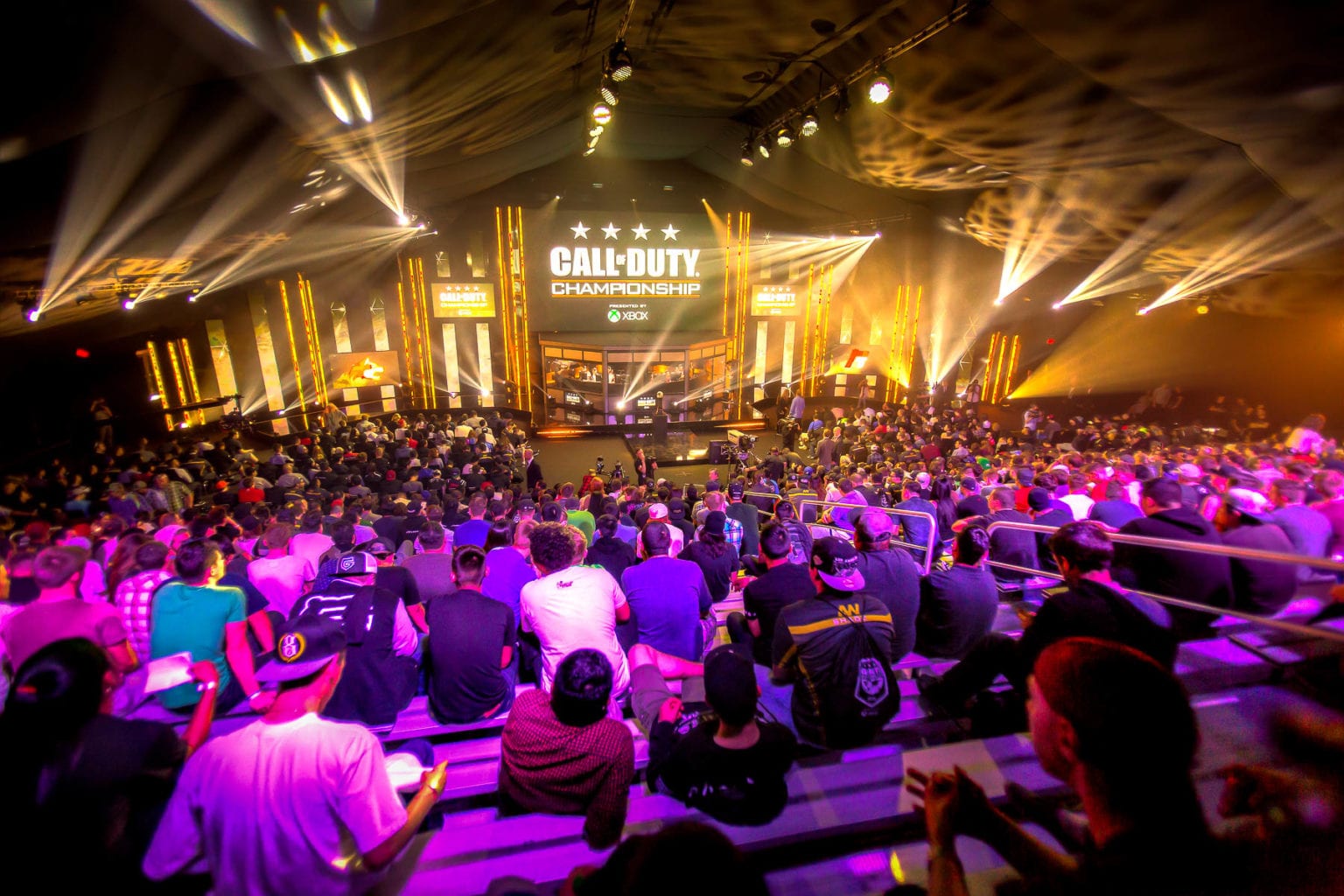
If we talk about a program or a client. I would say a previous program that would be a great example is Call of Duty XP with Activision. That’s something where we took and we combined all of the things that the Call of Duty community was asking for. We had amazing top-tier competitive gameplay with the Call of Duty Championship on site. We had exclusive hands-on opportunities for a title that was three months out from release, which is kind of unheard of in the gaming world.
And then, layer on top of that, things that only Call of Duty could give you, like a 20 versus 20 playable paintball course fashioned after the Nuke Town map in Call of Duty. All stitched together with a digital experience that allowed the 30-35 million-plus Call of Duty players across the globe a chance to access the experience if they couldn’t be one of the 10-12,000 people on-site with us each day.
These days we’re definitely focused upon smaller programs. Nobody’s doing 10,000 person events in the esports world right now. We’re doing a lot of remote broadcasts and hybrid kind of esports broadcasts with either fully distributed or with the small hub talent studio, that takes in all of our socially distancing protocols and then has all of our competitors and a lot of our talent distributed geographically.
We’ve got a few programs like that going on with EA, Activision and Wizards of the Coast. And with those we’ve worked with clients to shift some of the resources that would have typically been put towards on-site experiences and really trying to up the experience for our competitors and our talent, because we can give them a best-in-class experience. We’re convinced that they can give us a best-in-class performance, and that’s ultimately what’s going to make the show better for the people at home.
Thomas (TGH): Awesome. Yeah, that all makes a lot of sense. And you’ve kind of touched on the social distancing aspects, and some of the different adaptations that everyone has had to undergo during the current pandemic. Would you say that this is a time that you think that esports is particularly adaptable for? Is it something that has been a big challenge for you and the company, or is it something that we kind of more naturally have moved into, when compared to traditional sports and some of the other media?
Ryan Fitzpatrick: Yeah, I think gaming and esports is certainly well-suited to social distancing. There’s a host of challenges with that. Not all games are created equally. Some games are really much better played all in the same room on a LAN, versus played online. Not all game servers are created equally.
But by and large, yeah, esports has a distinct advantage certainly over traditional sports when it comes to social distancing. The bigger challenges are in the production of the show. Distributing our competitors is one thing, but distributing our broadcasts and our experience production is another challenge altogether.
Luckily, it’s something that we’ve been doing for years. So it was really just leaning into it a little bit more, and being a bit more intentional on which elements were going to be fully remote, and then paying attention to how things are changing around the globe. Are there opportunities to get small production teams together? Or when is the right time? And so we’ve got an internal team that focuses entirely on building out protocols based on where we’re activating across the globe and keeping us abreast of what the best practices are, when it comes to COVID.
I think there are a couple of things that we do when we leverage this kind of remote approach. First, we’re actively developing gaming and esports programs for brands that previously had expenses in the traditional sports space. You know, there are a lot of brands who tie a ton of their marketing and advertising dollars towards traditional sports, and they, like a lot of the broadcasters, were looking to esports as a way to kind of divert some of those spends and continue the conversation with their consumer. So we’re actively involved in a bunch of programs like that.
And then we’re also developing programs for a few traditional sports organizations. So teams and clubs that are hungry for live content and opportunities to satisfy their fans and their partner requirements, because all of these teams, all of these leagues have inventory that they’re not able to fulfill, and obligations they’re not able to fulfill, because they don’t have the live broadcast. So we’re trying to work with them to give them more outlets in the gaming and esports world to satisfy those requirements.
Thomas (TGH): Do you find that that’s an easy transition, or how are those conversations? What are those conversations like when you’re going from the traditional sports into esports, or different advertisers who maybe are really embedded in one, and then trying to maybe convert them into the other? Is this something that you find they actively pursue themselves, or is it something that takes a little bit more convincing? Tell me a little bit about that process of moving and adjusting between the two.

Ryan Fitzpatrick: Sure. I certainly wish it was easier! But, the landscape has changed a lot over the last even three to five years where a lot more people and executive leadership across a variety of organizations at least understand that gaming and esports is a thing they need to know about, and they need to kind of pay attention to and probably, if they haven’t fully invested in it, at least be dipping their toe in. So that barrier is already removed.
Now it’s less about should they do it, and it’s more about helping them identify the right way to do it, and what they should be doing, because it’s not a direct lift. Not everybody is able to just take exactly what they’ve been doing in traditional sports and port it over. We have to make some adjustments, address those different gaming audiences, figure out who the right gaming audience is for said brand. So I think it takes a little bit longer, because there’s an inherent education element to it. But you know we’re seeing success, and I know I’ve been doing this for quite some time, and it’s certainly much easier over the last few years than it has been over the last 10 to 15.
Thomas (TGH): We’ve mentioned gaming and esports, almost like they’re the same, when in fact I would say that they’re quite different. There’s obviously an overlap, but do you find that that is part of the conversation, as well, when it comes to marketing in gaming versus marketing in esports?
Ryan Fitzpatrick: Yeah. It absolutely is. It’s actually typically part of the first part of our education when we’re dealing with new brand clients, is explaining the difference between gaming and esports. I think most brands are using the terms interchangeably right now, when in fact we’re trying to get people to be much more intentional about which one makes sense for them. You know, I love esports. I’ve been working on this for quite some time, but I think for most brands, the best entry point is typically gaming, and then esports.
The exception is some of these brands that are heavily invested in traditional sports, and when you can kind of create those analogs from what they’ve done in traditional sports, to make it a little easier to enter into the esports realm. But, even if you just look at the overall approach to branding, I think gamers, in general, aren’t against branding, as long as if they feel like it’s providing some sort of value to them and they’re not being kind of exploited.
I think of branding in esports versus gaming as the difference between branding in traditional sports versus branding you might see at a well-done amusement park. It’s kind of a weird analogy, but in esports you get all of the more overt branding. You get all of your jersey branding, you’re in-arena signage. And then we’re even seeing Riot going kind of old school in integrating advertising and branding into their esports builds of League of Legends.
But, if you contrast that with the approach of branding in gaming where we tend to be much more subtle and focus on cleverly integrating the brand into the larger story or experience we’re trying to create. That’s been our experience, and how to kind of approach those two similar but different categories a little bit differently.
Thomas (TGH): Yeah, that makes a lot of sense. I’m curious how personally ingrained you are in esports and/or gaming. Do you follow teams? Do you go to events, or do you play games yourself? Or is this more of, you have a skill set and then this is kind of just a department, more of a work thing, rather than a personal thing?
Ryan Fitzpatrick: Depending on the time of year and what’s going on, it certainly feels like more of a work thing, than a passion, but I grew up a gamer. I continue to play, but nowhere near as much as I’d like. I do go to a lot of events, but I’m like your friend that worked in restaurants all their life, and you go out to eat with them, and they’re just constantly looking for how they would have done things differently or anything they might want to steal and bring back to their restaurant. I’m doing the same thing on the event side. I’m kind of a geek for all things like consumer experience and technical production, so when I’m doing it, it’s partially because I like going to these events and partially because I love learning about what other people are doing.
The cool thing about my job and what we do at NCompass is we’re always required to become an expert on something new. So if we’re pitching something for a new title, I do take the time and kind of dive in to understand not just how does the title work and what’s cool about it, but more broadly the community around it, and what inspires them. So I have been playing a little bit of The Last of Us Part II lately, but, I would say I spend a lot more time on Twitch and YouTube seeing what the community is saying about games than actually experiencing myself.
Thomas (TGH): Yeah, that’s what I was curious about–the research aspect of it–because you obviously have to know a certain amount and be a certain level of ingrained in the community. But, of course, it sounds like you also have that detachment, a certain level of detachment when you’re at an event or engaging in the game, where you also have in the back of your head how to utilize it and the listening part, like you mentioned earlier.
So, does a lot of that research happen in Twitch and YouTube via video, or is there other social media that you browse? What is the research element of this like?
Ryan Fitzpatrick: I mean, we will take anything we can get our hands-on. If we can get documentation and research and consumer data from our clients, we love that sort of thing. But, at a bare minimum we’re picking up the game title, we’re getting access to an alpha or beta and trying to play if it’s a pre-release sort of thing. We’re looking at Twitch and YouTube.
Gamers love Twitter and Instagram, and there’s a lot of information that can be gleaned, like everybody’s favorite love to hate, Reddit. I go deep on Reddit quite a bit. I think you can oftentimes find like the true heart of a community, for better or worse, on Reddit. So we certainly look there and then we have a team of people at NCompass who are, across different titles, our subject matter experts. So I know that we’ve got somebody on our team who I can tap if it’s a fighting game conversation. I know that he is the expert on FGC, so I can tap him and go a little bit deeper, and we’ve got that across a few different genres.
Thomas (TGH): Yeah, I think that makes a lot of sense. Couple more questions. What is something that you think casual fans might miss when they’re thinking about marketing in esports and gaming? And do you think that fans of gaming and esports should care about marketing? Is this something that they should even give two thoughts about, or what are your thoughts on the fan experience of marketing, and what are some things that may be at the surface they understand, but if you go a little bit deeper they might not realize or might not know?

Ryan Fitzpatrick: Good question. I think the big thing that casual fans might miss when they think about marketing in esports and gaming is all of the professionals who are behind the scenes making it happen. It’s a growing scene, but it’s still a really small world and it’s a world that I’m really proud to have been part of for such a long time. It’s a great community of people.
Should fans care about marketing? I mean, I learned a long time ago that as marketers, we should never tell fans what they should care about. So I’m going to back off of that one, but, that being said, marketing is an integral part of gaming and esports. It’s the reason why we see all of these great events, all these great shows, all of these incredibly powerful creators. I mean, these are all built on the backs of marketing and advertising budgets, so it’s the reason to see these huge prize pools for events. So, ultimately, I feel like great marketing should be invisible and not really feel like marketing at all. It’s kind of quietly guiding a story along and allow for fans and consumers to discover what resonates with them.
Thomas (TGH): Yeah, I think that’s fair that that makes a lot of sense. Lastly, what do you see, or how do you see the future of this industry? I feel like esports, while it’s developed over the last few years, it still feels kind of like a shiny new toy that everything hasn’t been explored yet. And I’m curious, as someone on the inside of this, what do you see as the future? Are there any opportunities that really excite you in the space that have not been explored yet, or that maybe we don’t have the pieces in place right now, but maybe in the future, it’s something that’s possible?
Ryan Fitzpatrick: I mean there’s a ton in store for the industry, and I think our catapulting into the world of remote productions is going to make the gaming and esports world feel smaller, in a good way. At NCompass we’re actively working to bring more inclusion and diversity to gaming by combining our in-house multicultural marketing expertise with our in-house gaming expertise to create more relevant programs for more diverse audiences.
We’re developing gaming and esports programs with HBCUs. We will continue to push for more diversity within our on-air talent lineups, and within our own organization. We think the North American Spanish language audience has been really underserved in the space for quite some time, and have some ideas on how to address that. We’re a women-owned agency, and we’re going to continue to create more opportunities for women in gaming, especially in the traditionally male-dominated tech space. And then, I would say there’s a lot to be done to make gaming and esports more reflective of the community that actually plays the games that everybody loves, and we’re really excited to be a key driver of that movement.
Thomas (TGH): Awesome. Well, thank you so much for your time. That is all the questions that I had and I learned a lot here. Any last thoughts?
Ryan Fitzpatrick: No, I’d just like to thank you again for your time. I think there were some great questions here, and if you’re looking for any more information on us, you can find us at Ncompassonline.com, or on Instagram at ncompassintl. And yeah, hope to see and hear from you all soon.
CREDITS
Check out TheGameHaus.com for more sports and esports articles and interviews. You can ‘Like’ The Game Haus on Facebook and ‘Follow’ us on Twitter for more content from Thomas and other contributors!